


Sustainable Planning and Sustainable Architectural Approaches
Published: · Updated:
How is the facility management sector perceived in our country? What would you say about the recognition the sector ought to receive, given that it delivers professional services in many areas and increases the value of property in both residential buildings and facilities?
Facility management has become a vital and indispensable requirement for keeping new facilities in sectors such as industry, tourism and healthcare in good order in every respect – legal, technical, administrative and so on – particularly as the building stock has expanded in recent years in parallel with the growing world population. Otherwise, disorder, lawlessness, confusion and chaos arise. In recent years, both worldwide and in our country, the facility management sector has become one of the most important types of service contributing to the economy and to employment, after the construction and manufacturing industries. If the structures that make up people’s living spaces – hotels, shopping centres, hospitals, ports, motorways, schools, housing and so on – are, thanks to proper planning, to be kept standing in sound condition for decades, with their architecture, physical characteristics and technical infrastructure, many disciplines need to work in coordination within facility management. Although the importance of the new type of facility management that adds value to real estate has been recognised in our country in recent years, the desired progress has not yet been made in legislation and regulation. A certain awareness has also formed in society; however, major material and non-material losses continue to arise from the many and varied problems that directly concern facilities and that could in fact have been prevented in advance through facility management. In particular, owing to recent events such as the climate crisis, fires, floods and earthquakes, disaster management in facilities has risen to the top of the list of priorities.
That said, I believe that the gap in this field will be filled quickly through the work and projects initiated by the experienced NGOs in the sector. The support that chambers such as the Union of Chambers of Turkish Engineers and Architects, and the supporting associations in the field, will give to the development of facility management in our country will also contribute. Most important of all is achieving the same degree of progress in public awareness.
What was discussed about the sector at the Sustainable Facility Management Summit (Sürdürülebilir Tesis Yönetimi Zirvesi) held in May? What kind of awareness do you think the summit has created in the sector, and were the first steps taken towards what might change in the sector?
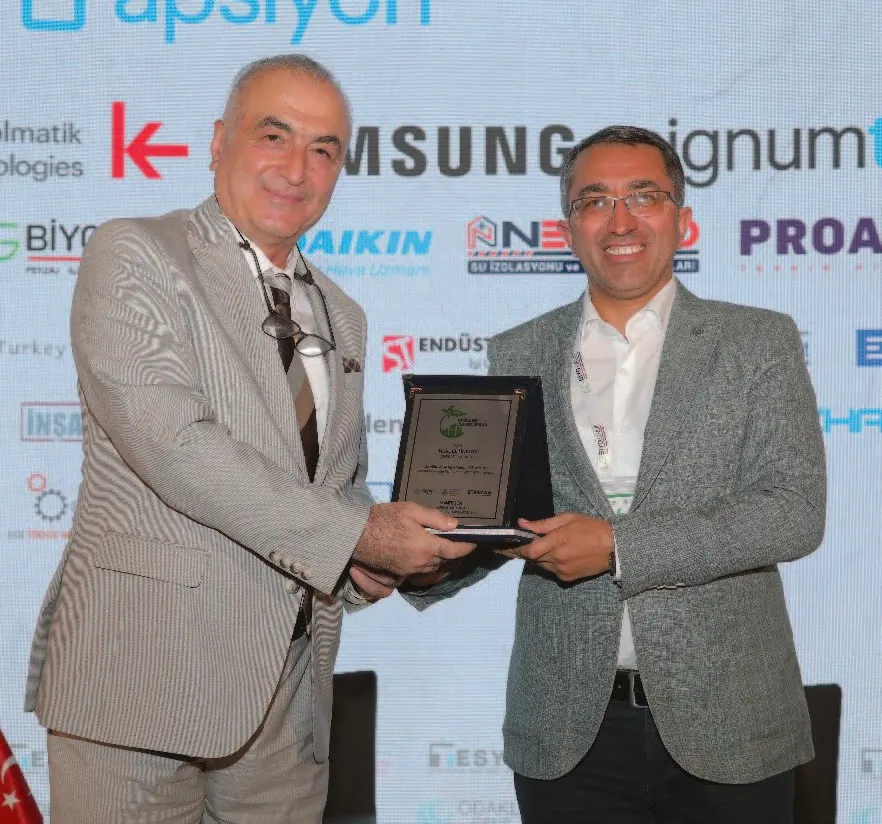
New areas of vital interest have emerged around new concepts such as Industry 4.0 and Industry 5.0, which is now being talked about. Chief among these is sustainability. With its very rich programme of presentations, the Sustainable Facility Management Summit was successfully held on 28 May 2024 at Nişantaşı Üniversitesi (Nişantaşı University) by UTTMD-TESYÖN and Odaklı Grup, with the support and contributions of our esteemed academics – first and foremost Rector Ayşegül Çıtıpıtıoğlu and Assoc. Prof. Dr. Gözde Mert – and of our sector stakeholders. Participants followed the topics presented at the summit with interest throughout the day. The event will be repeated every year in May. The state and needs of the sector were analysed.
The topics discussed were Sustainable Planning and Sustainable Architectural Approaches, the Components of Sustainable Management, and Examples of Good Practice in Sustainable Facility Management.
Finally, is there anything you would like to add?
The core component of facility management is facility technical management. Our association, the International Association of Facility Technical Managers (UTTMD), which operates in this field, was founded on 13 October 2010. Its members come from facilities such as hotels, hospitals, shopping centres, residential complexes and factories, and from technical organisations. It serves society through projects and activities focused on sustainability, encompassing concepts such as smart buildings, green buildings and digital transformation. Our association, which has grown over the years and aims to be an agile organisation, continues to be an institution that earns appreciation for the services it has provided to the sector over time.